
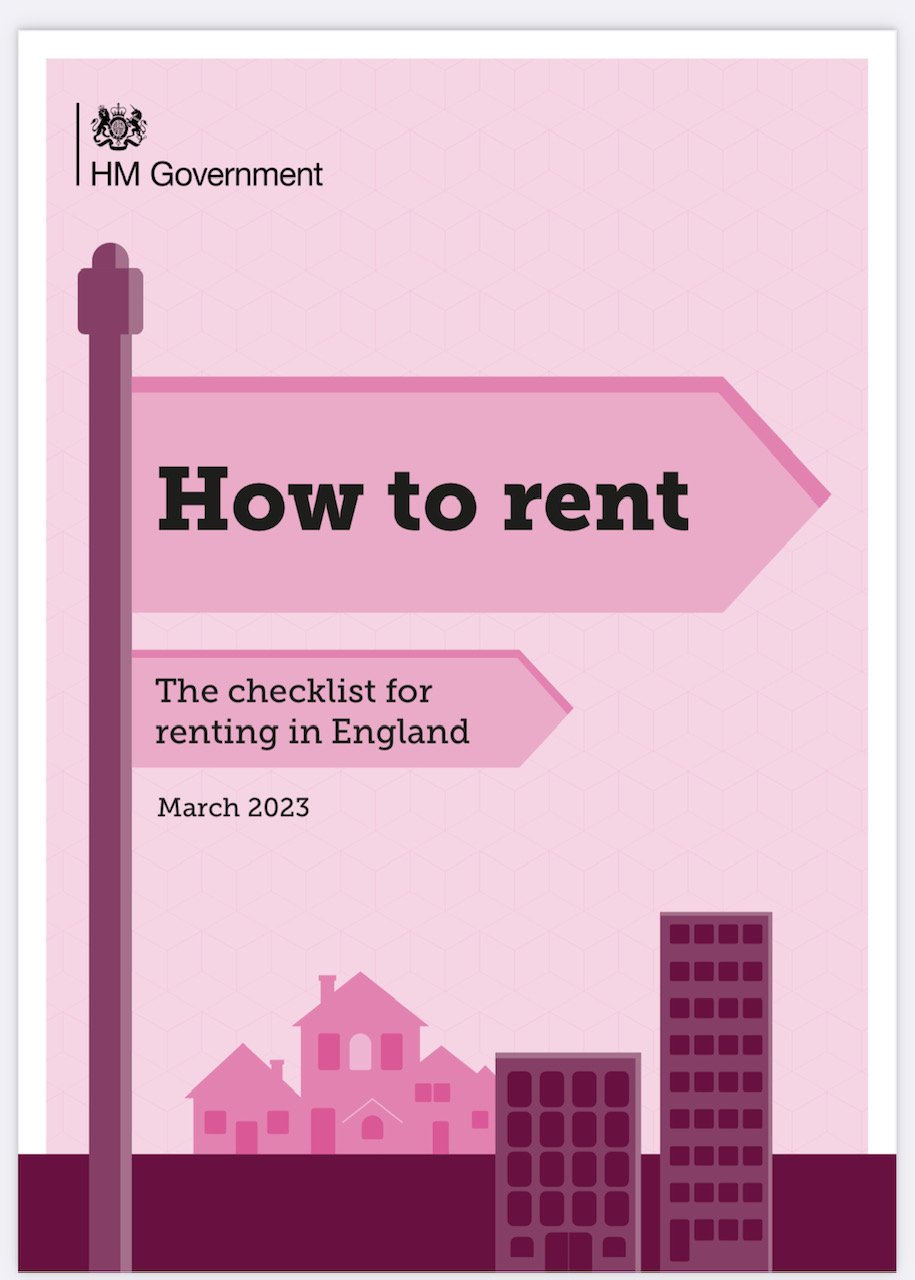
The new How to Rent Guide (England) Published
On the 24th March 2023 the long anticipated new How to Rent Guide (England) was published by the Department for Levelling Up,Housing & Communities.
The Guide, which needs to be served for all new tenancies and renewals in order for landlords to comply with the Deregulation Act 2015, has not been updated since December 2020 and the updated version contains some significant changes. The Guide reflects the changes in legislation relating to Smoke Detector and Carbon Monoxide Regulations as well as the introduction of the Electrical Safety Regulations from 2020 and the Guide also makes reference to checking if the property is suitable for the disabled. The reference to Covid 19 have been removed, as has the detailed overview of the Assured Shorthold Tenancy.

ONS - Index of Private Housing Rental Prices, UK: February 2023
Over the last 12 months there has been a lot of discussion surrounding rent increases on the private rented sector. Many landlords took the decision not to increase rent during the Pandemic or post Pandemic, however, due to the cost living crisis, the cost of energy and increases in interest rates, landlords took the decision to increase rents.
Landlords are permitted to increase rent at the end of every 12-month term. This can be done by relying on the rent review clause found in the tenancy agreement. If the tenancy is periodic and the tenancy is silent on rent increases, the landlord must serve a Section 13(2) notice (Form 4).
Importantly, a discussion with the tenant before increasing rent would be sensible as this allows both landlrod and tenant to negotiate on an increase which suits both parties.

The Old Cliche - Knowledge is Power rings True
How many times have we heard that knowledge is power? Countless no doubt and now more than ever this rings true in the Private Rented Sector (PRS). Twenty years ago the PRS was not deemed as important as estate agency commercially and also by the consumer. The PRS had a stigma attached to it that only those who could not get on the property ladder would have to rent - the UK was a nation of would be homeowners.
Yet, the recession in 2009/2010 changed this perception, driven predominantly by Supply V Demand, repossession and the lack of housing stock. Not only has the demand for rental property increased, the Letting Sector became an industry in its own right and Letting agencies and lettings departments played a key role in the property sector.

CYBER RISK ASSOCIATED WITH PROPERTY PROFESSIONALS
Not a day goes by without cyber security being in the press in one way shape or form. Cyber and Cyber Crime claims are now making up more than 50% of all claims in the insurance market and property professionals are by no means immune, yet the complacency around cyber liability insurance remains staggeringly high.
Cyber Liability is an area where firms feel they are unlikely to suffer an attack, and therefore choose to bear the consequences themselves should an incident arise. They believe their systems are rock solid or they are too small or of little interest to cyber criminals to justify the expense.
No business is 100% protected against cyber-crime. Cyber criminals are now more sophisticated than ever before and inclined to go after smaller more vulnerable businesses which they see as low hanging fruit compared with more complex larger companies who may have better security systems in place and take more time to penetrate.