
Blog
Here you'll find the thoughts of GLM CEO Susie Crolla on trends and issues of the day in the property industry.

Published by the Government
This winter we’re rolling out the ‘Register your rental property’ service, as part of the second phase of Renters’ Rights Act implementation.
If you’re a landlord of an assured or regulated tenancy, then you must register yourself and each of your properties through the service.
You won’t need to register on the service if you’re a landlord of supported exempt accommodation as set out in the Supported Housing (Regulatory Oversight) Act 2023. You can see whether this applies to you by checking Section 12 of the Act.
There’s an annual £65 registration fee per property, and you’ll need to renew your registration each year. If you don’t register your properties, then you risk being fined. Offline registration routes will be available for landlords who need them.

Press Release
The Guild of Letting & Management Limited (GLM) supports Gas Safety Week 2026 and urges people to “Take No Chances” with gas safety
Gas Safety Week takes place from 14th–20th September 2026, bringing together organisations, businesses, community groups and Gas Safe registered engineers across the UK to help keep the nation gas safe.
As a supporter of this year’s campaign, GLM is taking part by sharing gas safety advice with letting agents, posting campaign content on social media, reminding landlords to book an annual gas safety check.
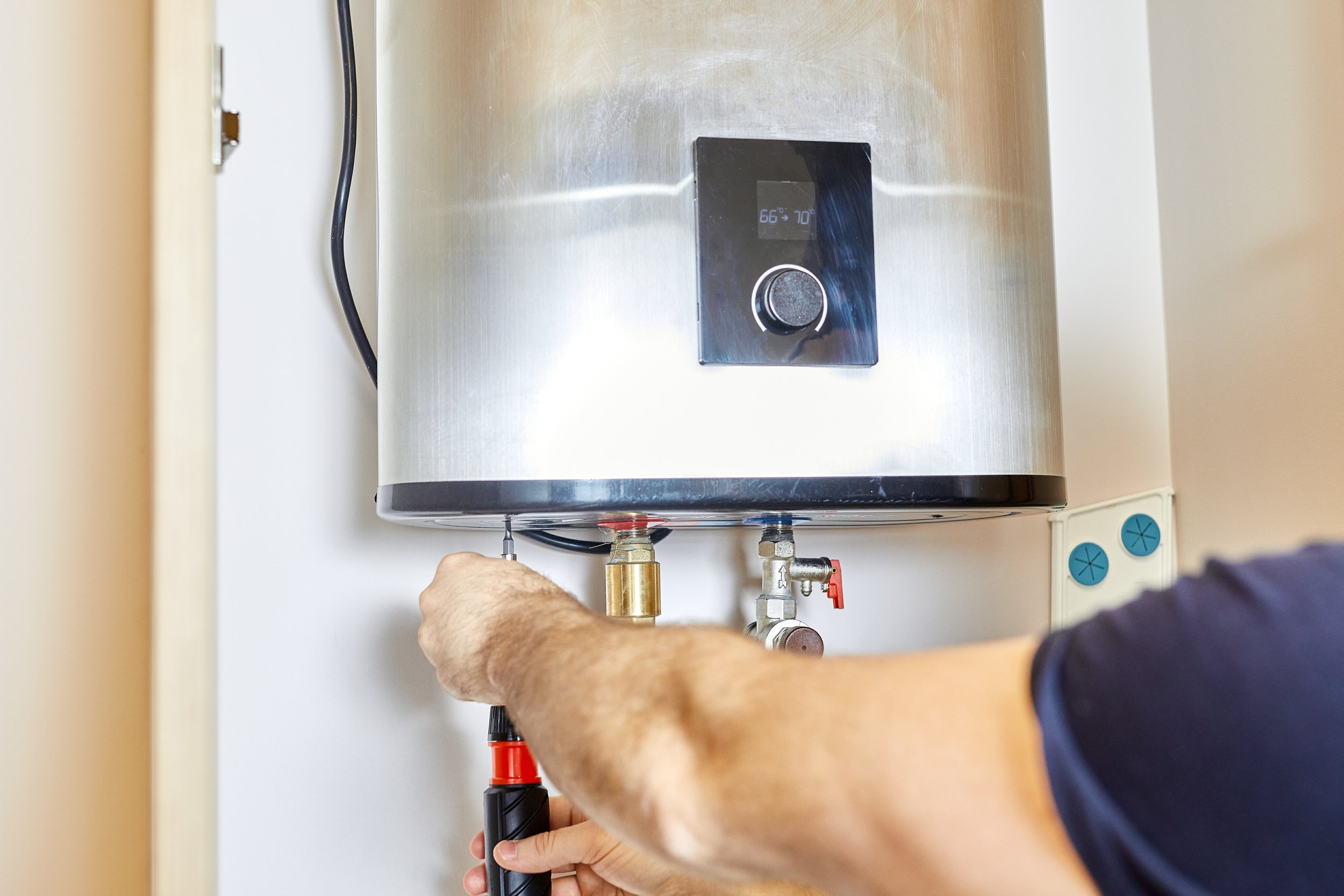
Even though summer has consisted of heatwave after heatwave, it’s important for landlords to start thinking about heating supply, appliances and installations in their rental properties.
Timing this article around Gas Safety Week (14th - 20th September 2026) is no accident. Coordinated annually by the Gas Safe Register, the campaign brings the gas industry, landlords, letting agents and consumer bodies together to reinforce one message - every check counts.

As the Autumn approaches, letting agents, landlords and most important of all, Ministry of Housing, Communities and Local Government (MHCLG) are preparing for the second phase of the Renters’ Rights Act. It is the Private Rented Sector Database - to be known as “Register Your Rental Property” which has created a stir since the Conservative government announced all landlords in England would be required to register their rental properties on a database.
Starting 1st September 2025., MHCLG will be starting a pilot of the database in Birmingham, Gateshead and Nottingham. The pilot will involve completing a 3-part registration process which includes providing personal details, property details and compliance information (e.g. Gas safety certificates). The data provided will be viewed by local council enforcement officers but won’t be used for enforcement purposes.

As the UK braces itself for its fifth heatwave of the year, with possible temperatures of 36C, it’s important to note the impact this extreme weather has had on industries where a dress code is the norm. The focus for the purpose of this blog is the property sector, but it applies to paramedics, the fire service, people working in construction, police officers, barristers, refuse collectors - the list could go on and on. In short, the UK is not used to extreme weather conditions and the heatwaves this year have proven that fact.

Since 1 May 2026, Section 13 (Form 4A) of the Housing Act 1988 (Amended) has become the only mechanism for increasing rent on an assured periodic tenancy in England. Rent review clauses, informal agreements, and the pressure of a tenancy renewal have all been swept away, and letting agents managing rent reviews now need a considerably more disciplined process than many were used to under the old fixed-term system.

In June 2022, Michael Gove the then Secretary of State made the following statement:- “Everyone has a right to a decent home. No one should be condemned to live in properties that are inadequately heated, unsafe, or unhealthy. Yet more than 2.8 million of our fellow citizens are paying to live in homes that are not fit for the 21st century. Tackling this is critical to our mission to level up the country. The reality today is that far too many renters are living in damp, dangerous, cold homes, powerless to put things right, and with the threat of sudden eviction hanging over them. They’re often frightened to raise a complaint. If they do, there is no guarantee that they won’t be penalised for it, that their rent won’t shoot up as a result, or that they won’t be hit with a Section 21 notice asking them to leave. This government is determined to tackle these injustices by offering a New Deal to those living in the Private Rented Sector; one with quality, affordability, and fairness at its heart.”

The Price Index of Private Rents (PIPR) measures private rent inflation for new and existing tenancies. The UK House Price Index (HPI) measures house price inflation.
England
Average monthly rent for England was £1,446 in June 2026, up by 3.4% (£47) from a year earlier. This annual rise was unchanged in the 12 months to May 2026 (3.4%).

On 1st May 2026, Phase 1 of the Renters' Rights Act came into force – the most significant overhaul of the private rented sector since the Housing Act 1988 (Amended). Assured Shorthold Tenancies gave way to periodic agreements, Section 21 was abolished, Section 8 became the only notice landlords can rely on to obtain possession and Section 13 the only lawful route to increase rent; rent in advanced has been limited to one monthly payment; landlords are not able to accept offers above the advertised asking price; there is no rent control or caps on rent increases, and rents can be increased in line with market rent; joint tenants can serve notice to bring the tenancy to an end without consulting with their co-tenants.

The first phase of the Renters’ Rights Act 2025 came into force on 1st May 2026, marking one of the most significant historical changes to possession proceedings since the introduction of assured and assured shorthold tenancies under the Housing Act 1988 (Amended).

The Housing, Communities and Local Government Committee has published correspondence from Matthew Pennycook, Minister of State for Housing and Planning, which states that the Ministry of Housing, Communities and Local Government will be unable to issue a response to the Committee’s report before the two-month deadline of 27 July 2026.

It is doubtful that anyone is surprised that Angela Rayner MP has been bought back into the fray and is back in post at Ministry of Housing Communities and Local Government - civil servants welcomed her back and put her official portrait back where it once was little over 10 months ago. There are many schools of thought that feel aggrieved given the alleged misunderstanding over the payment of Stamp Duty, however, there is a job to be done - she knows how the land lies - she is more than familiar with the department and Matthew Pennycook is forging ahead with ensuring the Labour Manifesto for Housing is well and truly adhered to.

As the UK experiences more frequent and more prolonged periods of extreme heat, landlords and letting agents are increasingly having to think seriously about how well their properties perform in warm weather — something that has traditionally received far less attention than winter preparedness. Where a burst pipe or a failed boiler was once the typical emergency call, an unbearably hot flat in July is now just as likely to prompt an anxious message from a tenant, and agencies that treat heat as a genuine housing condition issue, rather than simply “the weather”, tend to manage the summer season considerably more smoothly.

On 20 July 2026, Andy Burnham was appointed Prime Minister after being elected unopposed as Labour leader following Sir Keir Starmer's resignation. It is a change of leader rather than a change of governing party — there has been no general election. But for an agency built around the private rented sector, a change of Prime Minister with as long and as specific a housing track record as Andy Burnham's is not a footnote. It is worth understanding properly, both for what is unlikely to change.

Summer holidays, longer daylight hours and warmer weather tends to bring an increase in noise-related complaints, particularly in flats, apartments and properties with gardens. Handling these fairly and consistently, matters more than ever now that landlords must rely on Section 8 (Form 3A) should they wish to end a tenancy.

On 17th July 2026, we welcomed members to our latest webinar, continuing a programme that has become one of the most valuable ways we keep our clients informed, answer questions and provide practical guidance during periods of legislative change.
What began as a response to the challenges of the COVID-19 pandemic has evolved into an established benefit, helping professionals stay informed and prepared as the regulatory landscape continues to change.

The Renters’ Rights Act (RRA) highlighted the provision for tenants to challenge a rent increase something tenants have been able to do for very long time but the emphasis on this process has never been as significant as it has been since July 2025.
It is important to remember that the legislation has two sides of the same coin, like landlords, tenants must also adhere to the rules set out in line within the RRA. For example, they must meet time-frames, follow clear processes and provide information to support their case when applying to the First-tier Tribunal.

As temperatures soar during the summer months, so too does pest activity. Heatwaves create ideal conditions for insects and rodents, resulting in a noticeable increase in reports of ants, flies, wasps, rodents and other unwelcome visitors finding their way into rental homes.
Whilst many pest issues are relatively straightforward to resolve, they can quickly become probelmatic if it is unclear who is responsible for dealing with them. This is where a well-drafted tenancy agreement, supported by good communication between landlord and tenant, becomes invaluable.

In 2018, the Regulation of Property Agents (RoPA) working group Chaired by Lord Best examined the options for raising standards across the property agent sector.
The working group made recommendations on:
a model for an independent property-agent regulator
a single, mandatory Code of Practice for property agents
minimum entry qualifications and continuing professional development for property agents
clarifying processes and charges for leaseholders

2nd July 2026, sees House of Commons sit from 09:30 am. The primary business will centre around oral questions to government ministers, the Business Statement, and backbench debates as follows:-
09:30 am: Oral questions to the Secretary of State for Business and Trade Peter Kyle
Following Trade Questions: Business Statement to the Leader of the House

Videos created with The Guild of Letting & Management
The Deposit Protection Service (The DPS) has released a series of webinars for landlords and letting agents about the Renters’ Rights Act. The free-to-view videos cover:-
Changes to tenancy structures
Rules on raising rents
Pets in rented properties
Enforcement powers

The Government has announced plans to abolish insured tenancy deposit schemes which means landlords and letting agents will no longer be permitted to hold tenants' deposits in their client accounts, even where those deposits are protected through an approved insurance-backed scheme.
Housing Minister Matthew Pennycook confirmed that the Government intends to move to a single custodial model, requiring all tenancy deposits to be transferred to an authorised custodial tenancy deposit scheme at the outset of the tenancy.
The proposal forms part of the Government's wider programme of housing reform and is intended to strengthen consumer protection by ensuring that tenancy deposits are always held by an independent third party.
From 22nd June 2026, councils can issue fines of up to £7,000.00 if landlords are found to have serious hazards in their rented properties. From:-
Landlords who don’t fix dangerous problems like damp and mould now face fines of up to £7,000
New power now in force in the Renters’ Rights Act so councils can take stronger action where landlords fail to fix problems, alongside existing enforcement powers
New penalty will speed up fixes, as the Housing Secretary calls on councils to use all powers at their disposal to tackle poor conditions
Private renters will see stronger action on dangerous problems like severe damp and mould, following a new government crackdown.
Councils can now issue fines (from Monday 22 June) of up to £7,000.00 if landlords refuse to fix poor conditions.

A shift in towards regulation of the property sector is on the horizon within social housing and the Private Rented Sector.
Social Housing
It all began with former Housing Secretary Michael Gove’s announcement in 2023 that Social housing managers would be required to gain professional qualifications under the Social Housing (Regulation) Act 2023 to protect residents and raise standards in the sector and rightly so, in part as a result of the Grenfell Tower tragedy and in memory of two-year-old Awaab Ishak, who tragically died in 2020 due to prolonged exposure to severe black mould.

The UK Government has published a roadmap its plans to reform the Home Buying and Selling Process to make transactions easier, quicker and more efficient.
The roadmap sets out a process which is structured, digital with the objective of reducing delays and sales falling through.
There will also be greater emphasis on agents to be thorough when gathering, sharing and using information.

Article written by David Smith - 17th June 2026
The Money Laundering and Terrorist Financing (Amendment) Regulations 2026 were made on 9 June. These come into effect automatically 21 days after they were made, so will be in effect as from 30 June.
I wrote briefly about the draft regulations here when they were made available.
By far and away the most crucial and immediate change is that the €10,000 pcm rent threshold for compulsory AML checks for higher value tenancies changes to £10,000. This is quite a change as €10,000 is closer to £8,650 so there is quite a big jump here. This is also quite a key number as there are a fair few rental properties in the higher-end sector that would be picked up by a threshold at £8,500 but not by a threshold at £10,000 so I would anticipate that this will take a reasonable chunk of property out of AML controls and will give agents a lot more flexibility in this area.

In 2006, under the Housing Act 2004, the Housing Health and Safety Rating System (HHSRS) was introduced. It became the benchmark for local authorities to assess and set standards in relation to housing condition for the private rented sector. 20 years later, the government has reset the parameters and published draft Operating Guidance along with Enforcement Guidance for HHSRS.
When Is the New HHSRS Being Introduced?
The draft Operating Guidance and Enforcement Guidance for the Housing Health and Safety Rating System (HHSRS) were laid before Parliament on 23 March 2026 and are expected to come into force later this month.
Regulations were laid before Parliament on 1 June 2026.
The revised HHSRS is due to come into force on 23 June 2026.
The new framework will apply only to inspections commenced on or after 23rd June 2026.
Existing inspections already underway before that date will continue under the previous HHSRS system.

Over the last 2 years our free webinars have been well-received and extremely well attended by GLM members and non members to stay up to date with the government’s plans to roll out what was the Renters’ Rights Bill and subsequently, Act. The benefit, unlike training, was to provide a snapshot of the changes that were to be implemented and the impact on landlords, tenants and letting agents.
The webinars that we are currently running up to and including early December 2026 will focus on how landlords and letting agents are navigating the Renters’ Rights Act, the trends that are developing as a result and the challenges when it comes to dealing with change.
Register now - If there are any topics that would be of interest, contact laurengreen@guild-let.co.uk

We are very grateful for the support we have received for our Charity Golf Day - sponsors, golfers, the team at The Hertfordshire Golf and Country Club , a wonderful team of people who bring the day together - very excited to have taken part in a wonderful day with no rain.

The relationship between landlord and tenant is built upon trust, but property management requires regular oversight. One of the most valuable tools available to landlords and letting agents is the interim property visit, sometimes referred to as a routine inspection.
Whilst many landlords focus on the start and end of a tenancy, the period in between is often where issues can develop unnoticed. Regular interim visits provide an opportunity to identify problems early, maintain communication with tenants and protect both the property and the tenancy relationship.